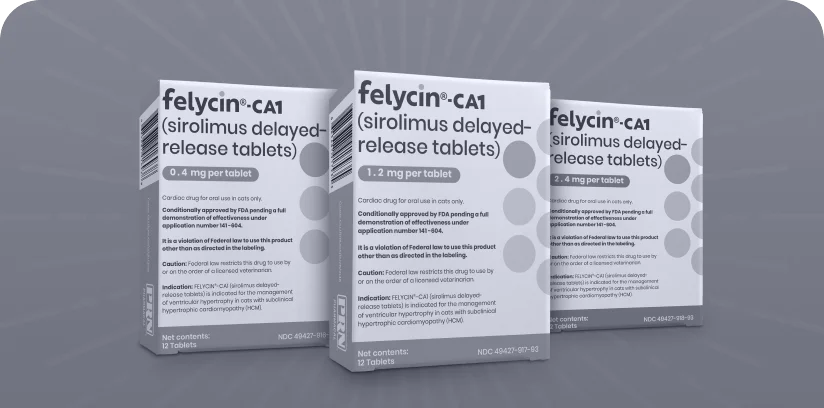
Felycin®-CA1 (sirolimus delayed-release tablets) is the first conditionally approved medication designed to target the underlying disease process of early-stage HCM in cats. Felycin-CA1 is a once-a-week pill, making the treatment experience less stressful for both cats and their owners as compared to treating with traditional daily or twice-daily medications. Unlike other heart medication, Felycin-CA1 targets the disease itself, helping delay serious symptoms, including heart failure.
A number of studies support that Felycin-CA1 is safe and provides a reasonable expectation of effectiveness. Results from the RAPACAT study show that Fecycin-CA1 is well tolerated and may prevent or delay heart wall thickening (ventricular hypertrophy),1 the key result of HCM. This gives both veterinarians and cat owners with confidence in Felycin-CA1 as a proactive management option.
How do I get Felycin-CA1 for my cat?
1. Diagnosing subclinical HCM
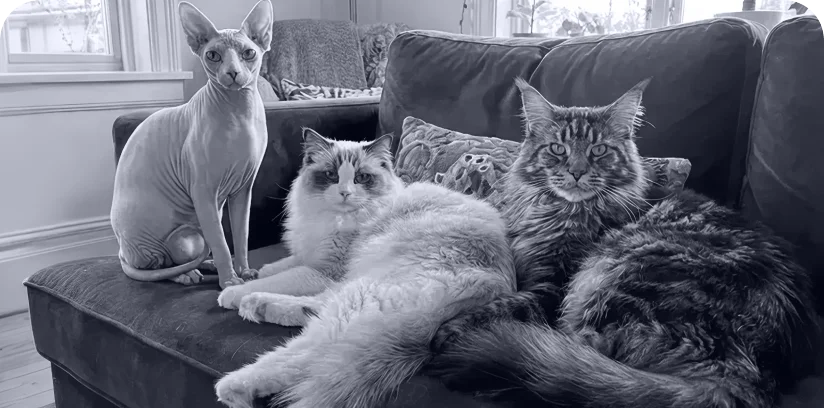
HCM is often called a “silent” disease because cats typically show no symptoms until it's advanced. Certain breeds like Maine Coons, Ragdolls, and Sphynx cats are at higher risk.
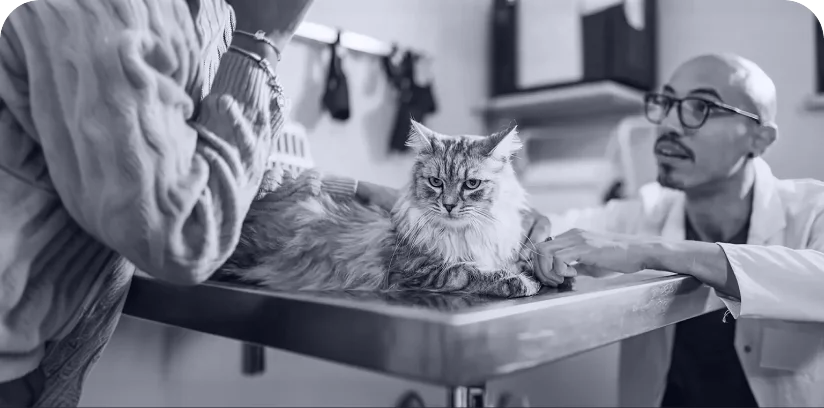
Most diagnoses begin when your veterinarian detects something during a routine exam—usually a heart murmur, irregular heartbeat, or abnormal heart sound. Your veterinarian may first run a blood test (NT-proBNP) to screen for heart disease. If results suggest a heart problem, the veterinarian may next suggest your cat receive an echocardiogram (heart ultrasound), which is the gold standard for confirming an HCM diagnosis. You might be referred to a veterinary cardiologist for this.
The cardiologist or general practitioner will use the test results to measure your cat's heart wall thickness. Anything over 6 millimeters indicates HCM. The veterinarian will also rule out other conditions that can mimic HCM, such as high blood pressure or hyperthyroidism, to ensure an accurate diagnosis.
2. Prescribing Felycin-CA1
Only veterinarians can prescribe Felycin-CA1. Once your cat is diagnosed with subclinical HCM (HCM without symptoms), your veterinarian will determine if your cat is a good candidate for this proactive-management option and provide the appropriate dosage instructions.
The Felycin-CA1 routine: Simple once-weekly dosing
Given as a small pill just once per week, Felycin-CA1 works by targeting the mTORC1 cellular pathway to potentially slow or reverse the heart muscle thickening that comes with HCM.
This once-weekly medication makes managing HCM a simpler experience than traditional heart medications for cats that are often required to be given daily or even twice a day.
If you’ve ever struggled to administer medication to a cat, you know how quickly it can become a source of anxiety for you and your cat. As Dr. Catherine Gunther-Harrington, DACVIM (Cardiology), a veterinary cardiologist at BluePearl Pet Hospital in Reno, Nevada, explains: “Getting cats to take medication can be really challenging. Rather than trying to wrestle their cat twice a day for a medication, giving a small pill once a week makes it more likely that cat owners are able to carry out treatment.”
How will the veterinary team monitor my cat’s progress?
Your veterinary team will create a simple monitoring schedule tailored to your cat, so you'll always know what to expect.
Bloodwork monitoring
- Baseline tests: Before starting Felycin-CA1, your veterinarian will likely run baseline blood tests to check your cat’s liver function.
- Follow-up schedule: They’ll likely run follow-up bloodwork after 1 to 2 months, then every 6 to 12 months to ensure your cat's liver isn’t being unintentionally affected. Most cats have no issues.2
Heart progress checks
Your cardiologist or general practice veterinarian may suggest scheduling periodic echocardiograms to measure your cat's heart wall thickness and track how well the treatment is working.
Signs of HCM to watch for at home
The goal with Felycin-CA1 is that your cat with subclinical HCM continues feeling and acting normal. Your main job is watching for any changes that might signal the disease is progressing.
Most important: Monitor breathing
- Resting breathing rate (RBR): When your cat is sleeping or deeply relaxed, count their breaths for one minute. It should be under 30 to 35 breaths per minute, according to Bill Tyrrel, DACVIM (Cardiology), co-chief medical officer of CVCA Cardiac Care for Pets. Every cat has a different RBR, so work with your veterinarian to establish your cat’s baseline.
- Breathing effort: Watch for any signs your cat is working harder to breathe or using their belly muscles to take breaths.
The veterinary cardiologist Dr. Tyrrel provides this tip for considering your cat’s breathing: “If you have to walk up to your cat and make sure he’s breathing, he’s fine. If you can see he’s breathing with a lot of effort using his belly muscles to help, we call that abdominal breathing effort. That’s when you need to get your cat evaluated.”
Other signs to watch for:
- Decreased appetite or energy
- Unusual hiding or behavior changes
- Any sudden difficulty moving (especially back legs)
Contact your veterinarian right away if you notice labored breathing, significant behavior changes, or any sudden mobility issues.
Frequently Asked Questions
A clear path forward for your cat
If your cat has been diagnosed with subclinical HCM, starting them on Felycin-CA1 means you're no longer just waiting and watching. Instead, you're actively working to protect their heart health with the most advanced HCM therapy available. Remember, the goal is that cats on Felycin-CA1 continue living normal, active lives while the medication works to protect their heart.
Give your cat a chance at a healthy heart. Talk to your veterinarian today about Felycin-CA1.
References
1 Kaplan JL, Rivas VN, Walker AL, et al. Delayed-release rapamycin halts progression of left ventricular hypertrophy in subclinical feline hypertrophic cardiomyopathy: results of the RAPACAT trial. JAVMA 2023;261(11):1628-1637.
2 Felycin®-CA1 (sirolimus delayed-release tablets), Package Insert. PRN Pharmacal.