
If your cat is diagnosed with HCM, don’t panic
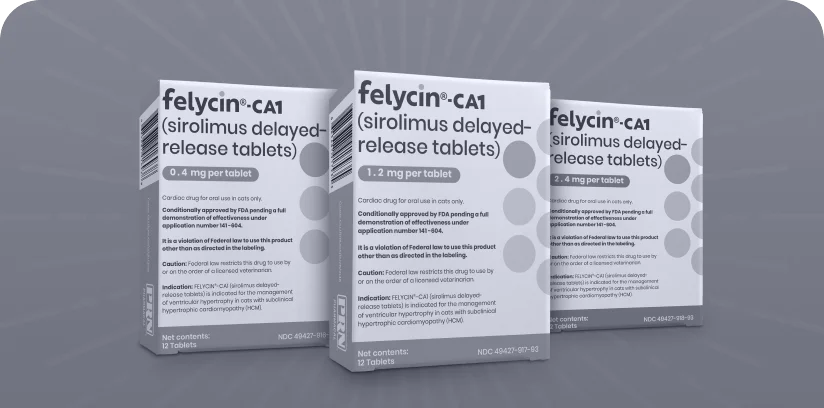
Hypertrophic cardiomyopathy (HCM) is the silent killer of cats. Felycin®-CA1 (sirolimus delayed-release tablets) is the first medication specifically designed to help cats with early stage HCM and turn the serious diagnosis into a manageable condition.

One pill a week makes managing HCM easy on you and your cat
Simply give your cat Felycin-CA1 once a week to help manage your cat’s subclinical HCM diagnosis. It can be administered with or without the use of a pet piller.
See how Felycin-CA1 works
When was your cat’s last checkup?
The best chance to catch HCM early is by bringing your cat in for their yearly appointment. If your veterinarian diagnoses your cat with HCM, ask them about Felycin-CA1.
Get more insights on Felycin-CA1 and HCM

What is Subclinical Hypertrophic Cardiomyopathy (HCM) in Cats?
Understanding this common condition Hypertrophic cardiomyopathy (HCM) is a heart condition where the muscle walls of the heart become abnormally […]

Cat HCM Risk Factors: Breed, Age and Early Warning Signs
Heart disease is one of the most common serious medical conditions affecting cats. If you have a cat in your […]

Echocardiograms: A Cat Owner’s Guide to HCM Diagnosis
Learning that your cat needs an echocardiogram to check for hypertrophic cardiomyopathy (HCM) naturally raises questions. As a cat owner, […]

What happens when subclinical HCM goes unmanaged?
HCM is known as the silent killer for a reason Hypertrophic cardiomyopathy (HCM) is the most common heart disease in […]

Living with a Cat Diagnosed with HCM: What to Expect
Learning that your cat has HCM naturally brings up many questions about what lies ahead. While an HCM diagnosis is […]

Cat Hiccups? Here’s Why You Shouldn’t Worry
Cats hiccup just like people If you’ve ever noticed your cat hiccupping, it’s natural to take out your phone and […]

What is sirolimus? A new hope for cats with HCM. | Felycin-CA1 (sirolimus delayed-release tablets)
Seeking a solution in sirolimus Sirolimus, also known as rapamycin, is a groundbreaking treatment with an interesting history. Since its […]
Sirolimus vs. Traditional Heart Medications for Cats with HCM
For years, veterinarians have been limited in treating cats with HCM, a serious and often undiagnosed heart condition known as […]

A Hero for Cats with HCM: the Science Behind Sirolimus
HCM is lifelong and life-threatening Hypertrophic cardiomyopathy (HCM) is the most common heart disease in cats, affecting about 1 in […]

What to Expect: Felycin-CA1 (sirolimus delayed-release tablets) for Your Cat’s HCM
Felycin®-CA1 (sirolimus delayed-release tablets) is the first conditionally approved medication designed to target the underlying disease process of early-stage HCM […]
Your Cat’s Journey Could Help Save Another Cat’s Life
Was your cat treated with Felycin-CA1? Share your story and show other cat owners what’s possible when subclinical HCM is treated early