Understanding this common condition
Hypertrophic cardiomyopathy (HCM) is a heart condition where the muscle walls of the heart become abnormally thick, interfering with normal heart function.1 In cats, this thickening makes it harder for the heart to fill with blood properly and pump it effectively throughout the body.
“Subclinical” means that a cat with HCM is not yet showing “clinical signs,” or symptoms associated with the condition.2 However, it’s important to remember that HCM can progress silently, potentially leading to serious complications without warning. These complications include congestive heart failure, blood clots, and even sudden death.
Many cats may have subclinical HCM
Research suggests about 1 in 7 cats has HCM, with most cats in the subclinical phase.2,3 While HCM can affect any cat regardless of breed, age, or gender, it’s more commonly diagnosed in middle-aged male cats. Most cats develop this condition as they age, but it can appear at any time.
Certain breeds, like Maine Coon, Ragdoll, British Shorthair, Persian or Sphynx cats, may have a higher chance due to genetics.2 However, it’s a good idea for any cat to go to the vet regularly. Because HCM often develops silently, annual vet checkups can help you catch problems before you’d ever notice them at home.
Subclinical HCM is silent and sneaky
Cats are masters at hiding illness. In the wild, showing weakness could make them vulnerable to predators, so cats have evolved to conceal symptoms until they're quite advanced.4 This makes it challenging to spot symptoms of HCM, and why catching HCM in the subclinical phase is so important.
In early stages of HCM, your cat may:
- Act completely normal
- Have normal energy levels
- Eat and play as usual
Even if your cat seems perfectly healthy, regular veterinary checkups can help you stay ahead of HCM before it makes your cat sick. Your veterinarian may detect a heart murmur, irregular heart rhythms and abnormal heart sounds, which are a clues your cat might have HCM. They’ll request additional testing to confirm the diagnosis, then recommend a management plan.
Early detection can save your cat
Without knowing your cat has HCM, you miss the opportunity for early management. As HCM progresses, it can lead to serious complications and even death.
The progression from subclinical to clinical HCM can be unpredictable. Some cats may remain in the subclinical stage for years, while others may progress more rapidly. Unfortunately, 23% of cats with HCM die from cardiac disease within 5 years of diagnosis.2,5
Early detection during the subclinical phase offers several advantages:
- Improved quality of life: Preventing or delaying symptom development
- Extended lifespan: Early intervention may help cats live longer, healthier lives
- Fewer emergency situations: Preventing sudden complications
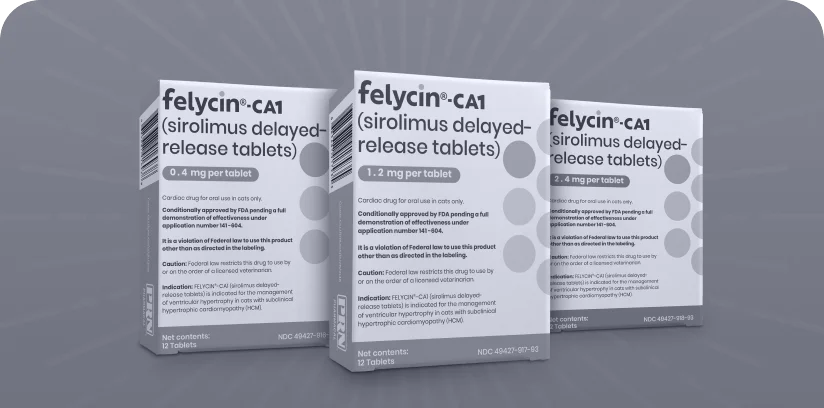
- Better management options: New medications like Felycin®-CA1 (sirolimus delayed-release tablets)
Felycin-CA1 is the first FDA conditionally approved once-weekly medication that may actually slow the progression of the disease itself, rather than just managing symptoms. It may work by:
- Slowing or preventing further heart wall thickening
- Delaying the onset of clinical symptoms
Reducing the risk of complications
There’s hope for cats with subclinical HCM
A diagnosis of subclinical HCM is not a death sentence for your cat. Many cats with HCM, especially when caught early, can live normal, happy lives for years with proper care and monitoring. The key factors that influence prognosis include:
- How early the condition is detected
- The severity of heart muscle thickening
- How well the cat responds to medication
- Whether complications develop
Early detection, appropriate management, and regular monitoring are the keys to managing subclinical HCM successfully. Many cats with this condition go on to live long, happy lives with proper care and attention. Regular veterinary checkups remain your best tool for protecting your cat's heart health.
With advances in veterinary medicine like Felycin-CA1, the first-ever FDA conditionally approved medication to manage subclinical HCM, there is more hope for cats with this condition than ever before.
Frequently Asked Questions
References
1 “Hypertrophic Cardiomyopathy.” Cornell Feline Health Center. May 2025.
2 Fuentes VL, Abbott J, Chetboul V, et al. ACVIM consensus statement guidelines for the classification, diagnosis, and management of cardiomyopathies in cats. JVIM 2020;34:1062-1077.
3 Kittleson MD, Cote E. The feline cardiomyopathies: Hypertrophic cardiomyopathy. JFMS 2021;23:1028-1051.
4 “When is your cat hiding illness or injury?” Texas A&M University Veterinary Medicine
& Biomedical Sciences. 14 September 2017.
5 Fox PR, Keene BW, Lamb K, et al. International collaborative study to assess cardiovascular risk and evaluate long-term health in cats with preclinical hypertrophic cardiomyopathy and apparently healthy cats: The REVEAL Study. JVIM 2018;32:930-943.