Seeking a solution in sirolimus
Sirolimus, also known as rapamycin, is a groundbreaking treatment with an interesting history. Since its discovery in the 1970s in a soil sample from Rapa Nui (Easter Island), rapamycin has led to historic breakthroughs in medicine for people and pets.1
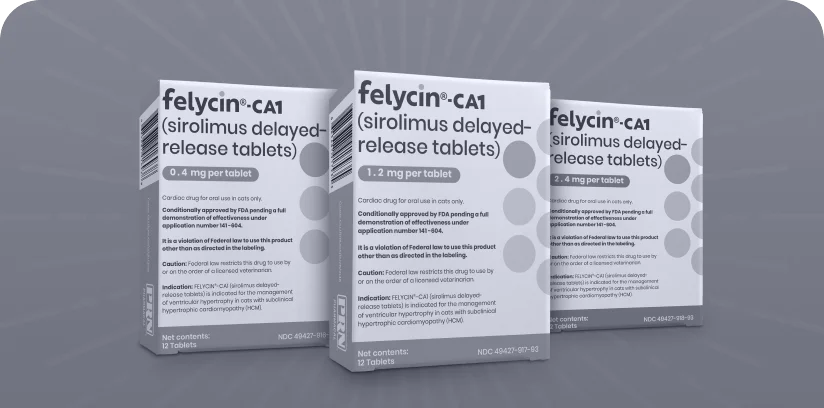
The discovery of sirolimus’ associated impact on human heart tissue paved the way for Felycin®-CA1 (sirolimus delayed-release tablets), the first and only FDA conditionally approved medication to help manage subclinical hypertrophic cardiomyopathy (HCM) in cats.
A surprise medical discovery
How does a compound found on a Pacific island become a groundbreaking treatment for cats with HCM?
It all starts with a surprise discovery in human kidney transplant patients. When these patients were treated with sirolimus to prevent their body from rejecting the transplanted organ, doctors found they also had reduced heart wall thickness.2
While it was initially developed as an antifungal medication, scientists found rapamycin had wide-reaching potential. This natural chemical produced by soil bacteria Streptomyces hygroscopicus quickly became known for its broad applications, from treating tumors and rare diseases to preventing organ transplant rejection.2
Another life for cats with HCM
If a cat is diagnosed with subclinical HCM, it can be managed with Felycin-CA1. Subclinical HCM means that the cat has the condition, but isn’t yet showing outward symptoms of heart disease.
Many cats with HCM, can live normal, happy lives for years with proper care. Not all cats with HCM will develop serious problems.
Fast facts about HCM
- 1 in 7 cats has HCM,3,4 and it often develops silently.
- 23% of cats with HCM die from cardiac disease within 5 years of diagnosis.3,5
- In cats with HCM, heart muscle thickens over time and makes the heart work less efficiently, leading to serious complications.
- There is no cure for HCM. Past treatment options focused on managing the complications with medication to help prevent blood clots, correct abnormal heart rhythms, decrease blood pressure, reduce fluid buildup, and manage pain.
Now that veterinarians have sirolimus, it’s possible to manage this heart-threatening condition and potentially slow its progression. This makes early diagnosis extremely important, so the condition can be identified and managed before it becomes devastating.
Extending the future
Before it became known as sirolimus, scientists researching potential uses for rapamycin discovered an intricate system in mammals that regulates things like cell growth and metabolism, protein synthesis and immune function.2 Scientists named these previously unknown pathways “target of rapamycin” kinases, or “TOR” kinases, to show their link to rapamycin’s function in the body.
How the system influences diseases6
- In conditions like diabetes, cancer and cardiovascular disease, this system can send incorrect signals to cells within the body.
- Because these signals are related to how cells function, the system can cause cells to grow or change in unusual ways, triggering diseases.
- Research suggests that it may be possible to prevent age-related diseases with rapamycin because of how it affects this system.
Rapamycin was found to suppress the immune system in mammals and slow the growth of cancer cells, leading to its use in cancer treatment and organ transplants. Now, rapamycin lives on as sirolimus, the active ingredient in Felycin-CA1 for cats, along with other medications for humans.
Sirolimus is also being studied for its anti-aging properties in animals and humans. Veterinarians are currently studying rapamycin’s effects on aging in dogs,7 and other research has shown promising results for longevity in mice. It’s clear that rapamycin has more secrets to reveal, but it all adds up to more time for pets and their people.
Routine checkups can save your cat’s heart
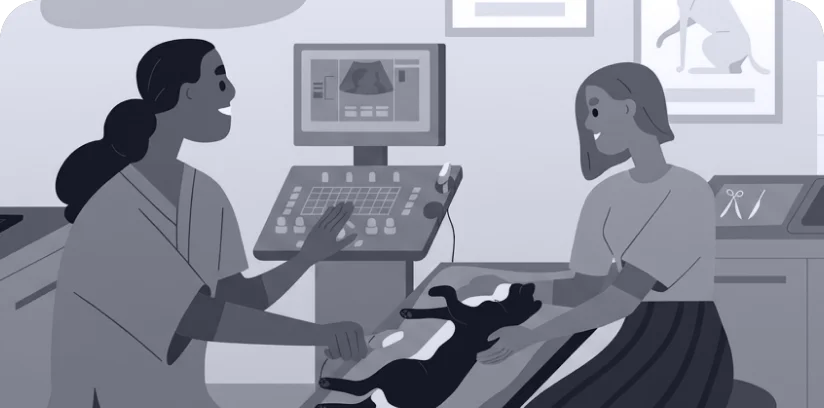
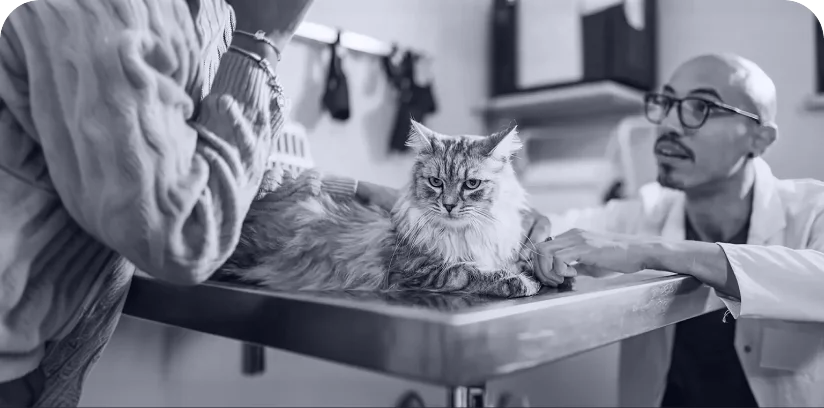
The best way to give cats their best chance at a long, healthy life is to schedule routine checkups with your veterinarian. They can check to see if your cat has a heart murmur, which may be an early sign of HCM. Your veterinarian may also recommend an echocardiogram to see if your cat has HCM. If your cat is diagnosed with HCM, ask if Felycin-CA1 is right for them. Learn more about Felycin-CA1.
Frequently Asked Questions
References
1 “Revisiting a Medical Marvel.” UC Davis Magazine. 19 May 2025.
2 “Rapamycin’s secrets unearthed.” Chemical & Engineering News. 18 July 2026.
3 Fuentes VL, Abbott J, Chetboul V, et al. ACVIM consensus statement guidelines for the classification, diagnosis, and management of cardiomyopathies in cats. JVIM 2020;34:1062-1077.
4 Kittleson MD, Cote E. The feline cardiomyopathies: Hypertrophic cardiomyopathy. JFMS 2021;23:1028-1051.
5 Fox PR, Keene BW, Lamb K, et al. International collaborative study to assess cardiovascular risk and evaluate long-term health in cats with preclinical hypertrophic cardiomyopathy and apparently healthy cats: The REVEAL Study. JVIM 2018;32:930-943.
6 Mathieu Laplante, David M Sabatini. mTOR signalting at a glance. J Cell Sci. 2009 Oct 7;122(20):3589–3594.
7 “$7M grant rescues dog study investigating rapamycin for canine aging.” AVMA News. 26 February 2025.