HCM is known as the silent killer for a reason
Hypertrophic cardiomyopathy (HCM) is the most common heart disease in cats. While some cats with HCM may live relatively normal lives, leaving this condition unmanaged can lead to serious, life-threatening complications. Understanding these potential complications is crucial to making informed decisions about your cat's heart care.
When HCM is left unmanaged, the thickened heart muscle continues to worsen over time. This progressive thickening creates problems that can dramatically impact your cat's quality of life and chances of survival. Cats developing congestive heart failure or arterial thromboembolism are unlikely to survive to one year.1
Here’s a look at some complications of HCM, what to watch for and how they affect your cat.
Fluid build-up puts pressure on their heart
Congestive heart failure occurs when the heart can no longer pump blood effectively throughout the body. When this happens, fluid can build up throughout the body and back into these areas:
- Lungs (pulmonary edema), causing severe breathing difficulties
- Chest cavity (pleural effusion), compressing the lungs
- Abdomen (ascites), causing a distended belly
Warning signs of congestive heart failure include:
- Difficulty breathing or rapid breathing
- Open-mouth breathing (a medical emergency in cats)
- Blue or pale gums
- Lethargy and reduced activity levels
- Loss of appetite and weight loss
- Hiding or seeking cool surfaces
- Restlessness or inability to get comfortable
Blood clots are a serious threat
One of the most serious complications of clinical HCM is blood clots in major arteries (arterial thromboembolism) or the heart itself (aortic thromboembolism). About 80% of cats with arterial thromboembolism die or are euthanized upon presentation.2
Blood clots can affect many parts of a cat’s body:
- Front or hind limbs, causing sudden paralysis and pain
- Brain, potentially causing stroke-like symptoms
- Kidneys, leading to kidney failure
These symptoms are a medical emergency:
- Sudden paralysis of one or more limbs
- Severe pain and vocalization
- Cold limbs with no pulse
- Pale or blue nail beds
- Difficulty breathing
- Collapse
EHCM impacts your cat’s quality of life
The thickened heart muscle in cats with HCM can lead to an irregular, rapid heartbeat and abnormal heart rhythms. These come with a risk of blood clots, fainting, collapse or even sudden death. Without management, the heart muscle continues to thicken, leading to complications in the heart:
- Less space for blood
- Difficulty filling with blood
- Blocked blood flow
Cats with unmanaged HCM may be less active, have difficulty breathing during regular everyday activities, experience discomfort from fluid build-up, or feel pain from blood clots. The stress of unmanaged heart disease often causes cats to hide more, interact or socialize less, change their eating habits, and become restless or anxious.
Unfortunately, when HCM goes undetected, some cats may die unexpectedly. There are many reasons why this may happen, including sudden and complete heart failure, arrythmias, or massive clots that block blood flow in critical areas.
Routine care gives cats a fighting chance
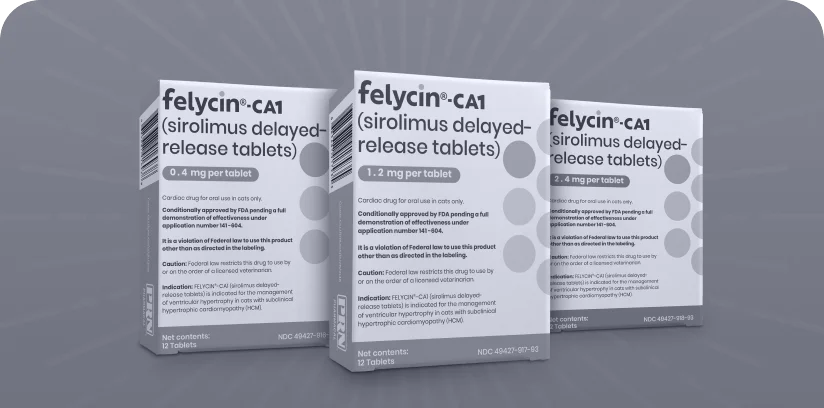
While the complications of unmanaged HCM are serious, catching the disease early can help give your cat the best chance at surviving this unpredictable, often deadly disease. New options like Felycin-CA1 (sirolimus delayed-release tablets) offer hope for managing subclinical HCM before complications develop. Learn more about this medication.
Regular veterinary care is essential for all cats, but especially those at higher risk for HCM. Early intervention can make the difference between a cat that suffers from serious complications and one that enjoys many more years of quality life.
Frequently Asked Questions
References
1 Fox PR, Keene BW, Lamb K, et al. International collaborative study to assess cardiovascular risk and evaluate long-term health in cats with preclinical hypertrophic cardiomyopathy and apparently healthy cats: The REVEAL Study. JVIM 2018;32:930-943.
2 Kittleson MD, Cote E. The feline cardiomyopathies: Hypertrophic cardiomyopathy. JFMS 2021;23:1028-1051.