Heart disease is one of the most common serious medical conditions affecting cats. If you have a cat in your family, understanding your cat's risk factors for HCM is one of the most important things you can do for their long-term health.
Hypertrophic cardiomyopathy (HCM), which is characterized by a thickening of the heart muscle, is the most common heart disease in cats, affecting one in every seven cats.1,2 It usually develops silently without any symptoms. While HCM can affect any cat, the most significant risk factors are breed (Maine Coon, Ragdoll, and Sphynx, among others), being a middle-aged male cat, and having specific heart sounds detected during a routine veterinary exam. Early screening is the key to proactive management.
When Dr. Sarah Bell, DACVIM (Cardiology), a veterinary cardiologist with CVCA Cardiac Care for Pets in Louisville, Kentucky, talks to cat owners about HCM, she often compares it to chronic kidney disease because both have a similar prevalence. Most cat owners know that chronic kidney disease is common in cats. They also know it can be medically managed for many years.
As Dr. Bell says, HCM can now be managed too. “The earlier we can screen, diagnose, and start treatment on cats with HCM, the better chance there is of saving us from having catastrophic complications down the road,” Dr. Bell said.
High-risk breeds for HCM: Is your cat at risk?3
Unlike other types of heart disease that develop because of lifestyle, HCM often develops because of genetics. Certain purebred cats face significantly higher risks than others:
- Maine Coon cats are arguably the most recognized breed for HCM predisposition. They were the first breed in which researchers identified a specific genetic variant causing the disease, making them a focal point for HCM research.
- Ragdoll cats also carry a genetic predisposition to HCM. There’s a genetic test available to identify a disease-causing variant in this breed.
- Sphynx cats are noted to be highly predisposed to HCM and may develop a particularly aggressive case of the disease. There is now a genetic test to identify HCM in this breed as well.
Other breeds with documented increased risk include:
- British Shorthair
- Persian
- Bengal
- Norwegian Forest
- Birman cats
Even if your cat isn't a purebred, family history of HCM puts them at increased risk. If you know that your cat's parents, siblings, or other relatives have been diagnosed with heart disease, your cat should be considered at higher risk and, like at-risk purebreds, may benefit from proactive screening.
Because HCM is known as the “silent killer,” Dr. Steven Rosenthal, DACVIM (Cardiology), co-chief medical officer at CVCA Cardiac Care for Pets in Hunt Valley, Maryland, emphasizes the importance of screening: “Certainly any cat with an abnormal finding on their physical examination or a cat whose breed or family history put them at risk for cardiomyopathy would be a cat we’d be more aggressive about wanting to screen.”
Age and sex: The demographic risk factors
HCM doesn’t affect all cats equally when it comes to age and sex. Understanding these patterns can help you assess your cat's individual risk.
- Male cats face higher risk. They’re generally more likely to be affected by HCM and at any age:
- Young male cats often develop HCM
- Middle-aged male cats are the most typical demographic to be diagnosed with HCM
- Older male cats continue to show predisposition
- Age increases risk. While cats can develop HCM at any age, their risk naturally increases as they get older, making regular veterinary checkups even more critical for senior cats.
Unusual heart sounds: Warning signs during veterinary exams
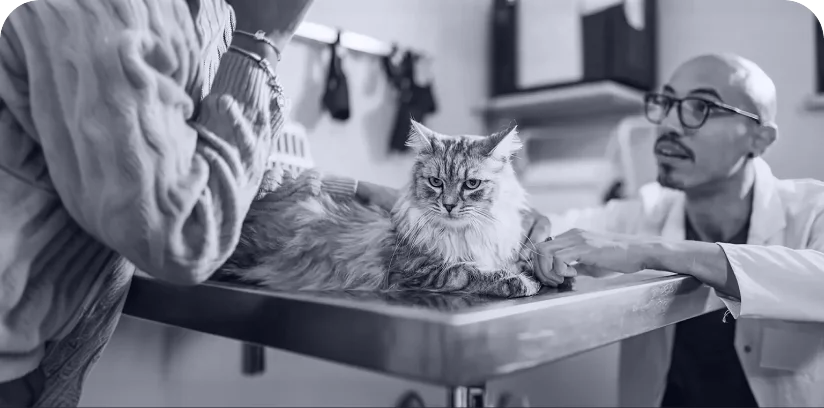
Because HCM often develops without obvious symptoms, many cases are first detected during routine veterinary examinations. During an exam, your veterinarian uses a stethoscope to listen for these heart sounds that could signal HCM:
- Heart murmur: An abnormal heart sound that indicates turbulent blood flow within the heart
- Irregular heart rhythm, gallop rhythm or arrhythmia: Heartbeats that don't follow normal patterns that often warrant immediate further investigation
- Loud murmurs: More pronounced abnormal heart sounds that also signal further investigation
Detecting one of these sounds isn’t necessarily cause for panic, but they do indicate your cat should get more specialized cardiac testing.
Dr. Catherine Gunther-Harrington, DACVIM (Cardiology), a cardiologist at BluePearl Pet Hospital in Reno, Nevada, explains why more testing is important: "Cats can have heart murmurs and have absolutely no heart disease, and cats can have severe heart disease and have no heart murmur or other outward signs. Unless you look, you don't know."
First-step HCM screening: NT-proBNP test
When cats display abnormal physical exam findings or are at high risk genetically, veterinarians can use a valuable tool to screen for HCM: the NT-proBNP blood test. This biomarker test measures a protein that indicates stress or stretch on the heart muscle wall.
The details:
- What an NT-proBNP involves. The beauty of this test is its simplicity. It requires only a small blood sample and can be performed during a regular veterinary visit, making it an accessible first step in heart disease detection.
- What to do with the results. Your veterinarian will suggest what’s next for your cat based on the results. An elevated NT-proBNP level serves as a strong indication that your cat needs an echocardiogram, a specialized heart ultrasound usually performed by a veterinary cardiologist.
It's crucial to note that diagnosing HCM isn't always straightforward. Several other conditions can cause heart muscle thickening that mimics HCM, such as hyperthyroidism
and systemic hypertension (high blood pressure). An echocardiogram along with bloodwork allows veterinary cardiologists to rule out other diseases to ensure HCM is the accurate diagnosis.
What the risk factors mean for your cat and you
Understanding your cat's risk for HCM empowers you to take proactive steps.
- Yearly checkups for all cats. Regardless of your cat's specific risk factors, regular veterinary checkups remain your best defense against HCM. Remember, many cases of HCM are discovered during routine examinations when cats appear perfectly healthy.
- More thorough screening for at-risk cats. If your cat fits into one or more of the risk categories, discuss the pros and cons of proactive screening with your veterinarian. Early detection opens the door to treatment.
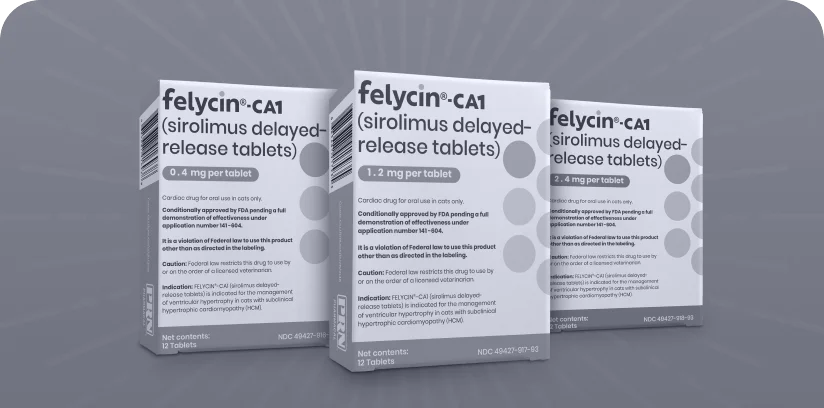
A new management option for subclinical HCM. Until recently, managing HCM was a “hope for the best” situation, because available medications only treated the symptoms. Now, with the new medication Felycin®-CA1 (sirolimus delayed-release tablets), veterinarians can begin managing HCM before symptoms develop. This stage of HCM is known as subclinical.
Felycin-CA1 is the first FDA conditionally approved medication designed specifically to target the underlying disease process in cats with subclinical HCM. This once-weekly medication offers a proactive approach to managing heart disease before symptoms appear, potentially helping cats live longer, healthier lives.
Frequently Asked Questions
Next step: Proactively managing risk
If you recognize risk factors in your cat, don't wait for symptoms of HCM to appear. Schedule a conversation with your veterinarian about:
- Your cat's specific risk factors
- Whether screening tests like NT-proBNP or an echocardiogram are appropriate
- What monitoring schedule makes sense for your cat
- Management options if HCM is detected
Remember, HCM may be common, but early detection and proactive management of subclinical disease with Felycin-CA1 can potentially make a significant difference in your cat's quality of life and heart health. The key is knowing your cat's risks and working with your veterinary team to stay ahead of this silent disease.
References 1 Fuentes VL, Abbott J, Chetboul V, et al. ACVIM consensus statement guidelines for the classification, diagnosis, and management of cardiomyopathies in cats. JVIM 2020;34:1062-1077.
2 Kittleson MD, Cote E. The feline cardiomyopathies: Hypertrophic cardiomyopathy. JFMS 2021;23:1028-1051.
3 “Hypertrophic Cardiomyopathy.” Cornell Feline Health Center. May 2025.